

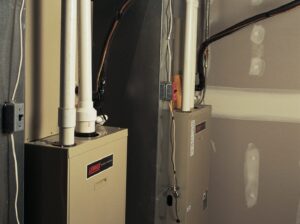
When it's time to replace a furnace, one of the first questions is whether to choose gas or electric. In California, the right answer depends on the fuel you have access to, what your utility bills look like, and how your home is built. Here's a straightforward comparison of a gas vs. electric furnace for California foothill homes, plus a look at when a heat pump might be the smarter third option.
Performance Based Heating & Air is a veteran-owned, NATE-certified company serving Tuolumne and Calaveras Counties and installing Trane heating equipment and Mitsubishi systems.
Key Takeaways
- Gas furnaces typically cost less to run where natural gas or propane is available; electric furnaces usually cost less up front but more to operate.
- Electric resistance heat converts all the electricity it uses into heat, but because electricity is often costlier per unit of heat, bills can run higher.
- Fuel access is the first question: many foothill properties have natural gas service, while others rely on propane.
- A heat pump is worth considering if you want heating and cooling from one efficient system.
- Correct sizing and installation matter as much as the fuel you choose.
What is the main difference between a gas furnace and an electric furnace?
A gas furnace burns natural gas or propane to heat air, while an electric furnace uses electric resistance elements to do the same job. Gas units need venting and a fuel supply; electric units need adequate electrical capacity but no combustion or flue.
That difference drives nearly everything else: installation requirements, running costs, and the way each system behaves during a cold stretch.
Which costs less to run, gas or electric?
In most homes with access to natural gas or propane, a gas furnace costs less to run than an electric one. Electric furnaces are inexpensive to buy, but electricity is usually pricier per unit of heat, so monthly bills tend to be higher.
The U.S. Department of Energy explains that electric resistance heating is 100% efficient in the sense that all incoming electricity becomes heat, yet it is often more expensive than heat from combustion appliances because of how electricity is generated and delivered. The DOE also notes that heat pumps can cut electricity use by about 50% compared with resistance heating. You can read more in its overview of electric resistance heating.
Gas vs. electric furnace at a glance
| Gas furnace | Electric furnace | |
| Fuel | Natural gas or propane | Electricity |
| Upfront cost | Generally higher | Generally lower |
| Running cost | Often lower where gas or propane is available | Often higher |
| Installation needs | Gas line or propane supply, venting | Adequate electrical service |
| Heat feel | Hotter air from the registers | Warm, steady air |
| Best fit | Homes with gas or propane access | Homes without fuel access, or small spaces and additions |
What do foothill homeowners need to consider?
Foothill homeowners should consider fuel access, winter temperatures, and the age and layout of the home. Colder nights put more demand on a heating system, and rural properties may not have natural gas service, which shifts the decision toward propane or electric.
Older homes and additions can also complicate things. Existing venting, duct layout, and electrical capacity all affect which system is practical. We look at those details first rather than assuming one answer fits every house in Sonora, Murphys, or Twain Harte.
When does a heat pump make more sense than either?
A heat pump makes sense when you want one system for heating and cooling and your home suits it. Instead of generating heat by burning fuel or running resistance coils, it moves heat, which is why it can use considerably less electricity than a standard electric furnace.
Mitsubishi ductless heat pumps are also a strong option for additions, converted garages, or rooms that never match the rest of the house. Learn more about our heat pump services, and we'll tell you honestly whether it's a good fit for your home or whether a furnace is the better call.
Does installation quality matter as much as the fuel type?
Yes. A well-chosen furnace that is oversized, poorly vented, or connected to leaky ducts will underperform a smaller, correctly installed one. Sizing the unit to your home's actual heating load is what keeps it comfortable, efficient, and long-lived.
Our approach is to evaluate the home, explain your options at several price points, and install with care — drop cloths and shoe covers on every job. See our full range of heating services for more.
Frequently Asked Questions
- Is a gas furnace more efficient than an electric furnace? It depends on how you measure. An electric furnace converts all the electricity it uses into heat, but gas is often cheaper per unit of heat, so gas usually costs less to run.
- Can I switch from an electric furnace to a gas furnace? Often yes, if gas or propane is available at your property and the home can be vented properly. Your installer will assess supply, venting, and costs.
- Are electric furnaces safer than gas furnaces? Electric furnaces don't burn fuel, so they have no combustion byproducts. Properly installed and vented gas furnaces are also safe and include built-in safety controls.
- Should I consider a heat pump instead? If you want efficient heating and cooling from one system, it's worth a conversation. We'll compare it to a furnace for your home.
Not sure which system fits your home?
Performance Based Heating & Air will walk through your options honestly and quote what fits your home and budget. Call 209-588-7340 to get a free quote on a new system or ask about ductless mini-split options for your home.